
WHAT IS 3D PRINTING
Understanding Fused Deposition Modeling for Custom Manufacturing, Prototyping & More
FDM 3D printing—short for Fused Deposition Modeling—is one of the most widely used and cost-effective 3D printing technologies in the world. At The Karya Quotient, we use FDM printing to create custom-designed parts, educational kits, branding tools, and functional prototypes across a wide range of industries. Whether you’re a teacher, maker, product designer, or entrepreneur, understanding how FDM printing works can open up new creative possibilities.
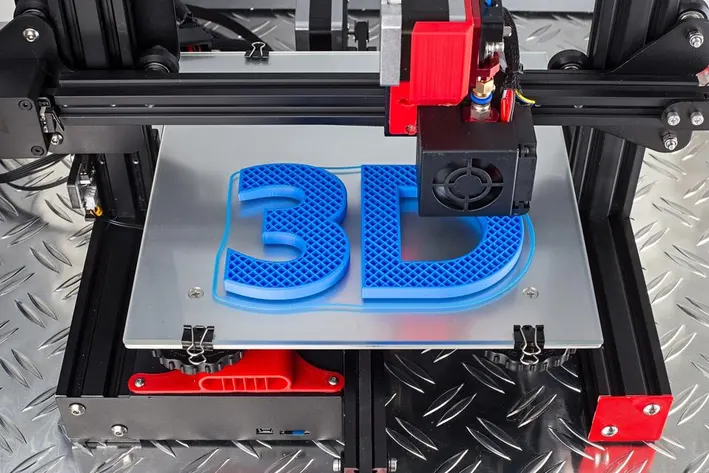
Fused Deposition Modeling (FDM) is an additive manufacturing process that builds objects layer by layer from the bottom up, using a melted thermoplastic filament. A heated nozzle extrudes the material precisely onto a build platform, creating 3D objects directly from digital models (STL, OBJ, or 3MF files).
FDM is ideal for producing:
Functional prototypes
Custom enclosures or parts
Toys, models, and decor
Educational kits (like our EduShapes 3D)
Low-volume production parts

How Does FDM 3D Printing Work?
The FDM process involves:
Designing a 3D Model
Use software like Fusion 360, Tinkercad, or Blender to create your object.Slicing the File
The design is sliced into thin layers using a slicer software like Ultimaker Cura or PrusaSlicer, which generates G-code for the printer.Loading Filament
Common filaments include PLA, PETG, ABS, and TPU, each with different properties.Printing
The printer’s nozzle heats up (typically 190–250°C) and deposits melted filament onto the bed in layers.Cooling & Post-Processing
After printing, objects may require support removal, sanding, or painting, depending on their use.
What Materials Are Used in FDM Printing?
FDM printers use thermoplastics—polymers that melt when heated and harden when cooled.
Most Common FDM Materials:
| Material | Properties | Uses |
|---|---|---|
| PLA (Polylactic Acid) | Biodegradable, easy to print | Educational kits, toys, prototypes |
| PETG | Strong, water-resistant | Functional parts, mechanical uses |
| ABS | Durable, heat-resistant | Enclosures, automotive parts |
| TPU | Flexible, rubber-like | Phone cases, wearable parts |
We’ll help you choose the right filament for your specific project.
Why Choose FDM 3D Printing?
✅ Affordable & Accessible
FDM offers one of the lowest costs per part in 3D printing.
✅ Fast Turnaround
Ideal for rapid prototyping and on-demand production.
✅ Customizable
You can easily make changes to a design without expensive retooling.
✅ Educational Value
Great for STEM education, demonstrations, and classroom models.
At The Karya Quotient, we’ve created everything from custom logos and labels to interactive educational kits and even replacement parts for machinery.