
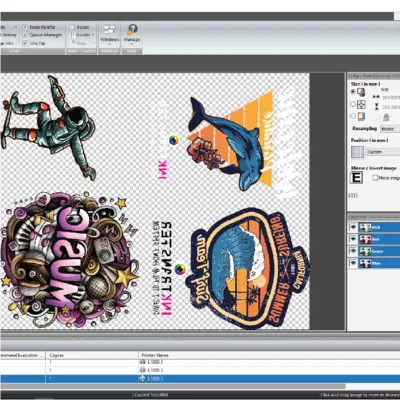
HOW TO PREPARE YOUR FILES
How to Prepare Print Files for DTF Printing
Preparing your artwork correctly is the most important step for flawless DTF (Direct-to-Film) transfers. At The Karya Quotient, we want your prints to look perfect—whether you're customizing T-shirts, branding merchandise, or ordering UV DTF stickers. This guide explains exactly how to prepare print files for DTF printing, including formats, resolutions, and common file mistakes to avoid.
Why File Preparation Matters
DTF printing is a precision-based digital process. Unlike screen printing, your file is printed exactly as it’s submitted. A clean, properly formatted file ensures:
✅ Sharper prints with vibrant colors
✅ Perfect edges (no weird halos or cut errors)
✅ Faster processing and quicker turnaround
✅ Better adhesion during heat pressing
Transparent Backgrounds vs. White Backgrounds
✔️ DO: Use a transparent background if your design should float on the fabric.
❌ DON’T: Use a white square background unless it’s intentional.
If your file includes a background, make sure it’s part of the design. Otherwise, your transfer may include a white box around it.
Design Quality & Cleaning Tips
Before submitting your design:
Check Edges: Zoom in 200–400% to inspect your outlines. Smooth edges = smooth transfers.
Avoid Gradients That Fade to Transparent: These may not print correctly.
Eliminate Hidden Layers or Masked Objects: Flatten all visible elements.
Use Solid Fills Where Possible: DTF printers handle bold, flat colors beautifully.
Think like a printer: every pixel is printed. What you see is what gets pressed.
File Format & Size Guidelines
To get the best results, follow these technical requirements when sending your design:
| Setting | Recommended Value | Why It Matters |
|---|---|---|
| File Type | PNG (preferred), PDF, or TIFF | PNG allows transparent background and high quality |
| Resolution | 300 DPI (dots per inch) | Ensures a crisp, high-definition print |
| Color Mode | RGB (not CMYK) | DTF printers work best with RGB color profiles |
| Canvas Size | Match final print size + bleed if needed | Prevents distortion or resizing issues |
| Background | Transparent | Avoids accidental white boxes around artwork |
Best Practices for Apparel Transfers
For T-shirt printing and fabric branding:
Keep designs between 10–27cm wide, depending on placement
Leave at least 0.5 cm of margin around the edge
Avoid ultra-fine lines below 0.3mm—they may not transfer properly
Use bold contrast colors for black or dark fabric
If you’re unsure how your design will look, we offer mockups and proofs before final printing. Just ask!
Common Mistakes to Avoid
Low-res files from the internet (blurred or pixelated)
CMYK files (colors may shift)
Designs with hidden or locked layers
Flattened JPGs with white backgrounds
Text that isn’t outlined (fonts might not match)
Need help? Contact us and we’ll prepare your print file for you at no charge if you’re placing a confirmed order.
